Echo Soho: London’s new satellite art fair launches at Frieze week 2025
- Nov 20, 2025
- 4 min read

Intertwined with London’s biggest art week, Soho Revue founder India Rose James has launched Echo Soho, a new satellite art fair spotlighting female-led galleries. As a gallerist, collector, and curator, James has travelled to art fairs across the world and noticed a striking absence: while major art events abroad all feature smaller, satellite fairs, London had none.
Despite being the city’s largest art fair, Frieze remains highly selective—often leaving little room for emerging artists, particularly those represented by women-owned galleries. Recognizing this gap, James set out to build something different. With Echo Soho, she expands on the mission of her own female-led gallery, Soho Revue, creating a space that celebrates emerging female talent while fostering community, collaboration, and creativity among artists, gallerists, and art lovers alike.

Hosted in a once-abandoned Georgian townhouse at the core of Soho, Echo Soho made its debut at the Artists’ House on Manette Street during Frieze week, bringing together 12 female-led gallerists from across the UK in its inaugural edition. As you walk up the creaking steps of the old townhouse, the scent of coffee from the pop-up café downstairs mingles with the low hum of conversation, and it’s immediately clear that James’ vision of creating a more intimate, connection-driven art fair has come to life.
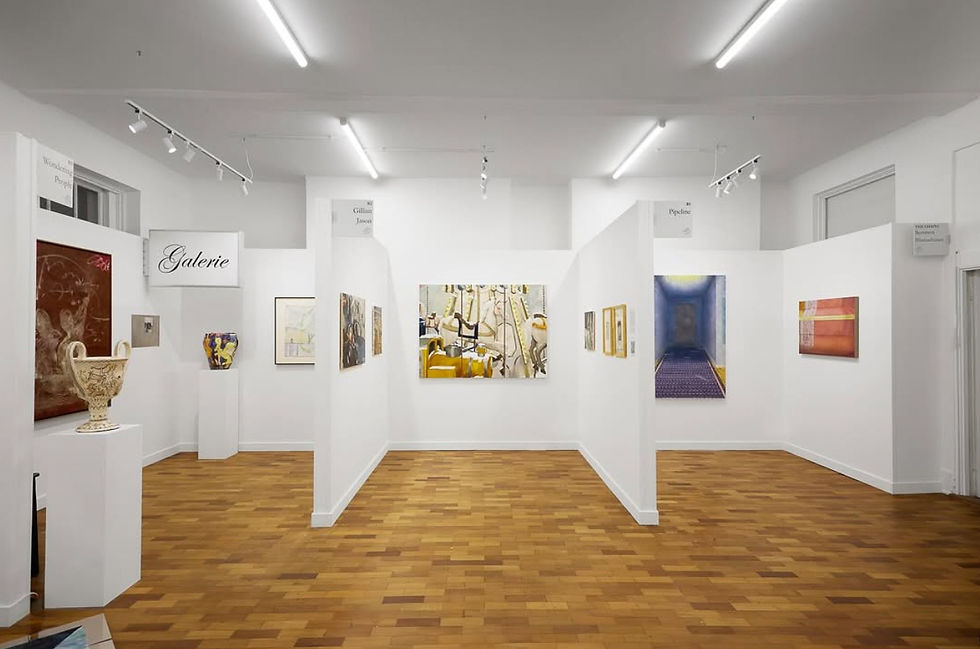
Unlike the often frenetic pace of larger art fairs, Echo Soho moves at a slower rhythm, encouraging visitors to pause, chat with gallerists, and truly engage with the works on display. On the second floor, all twelve gallerists are set side by side, each presenting a curated selection of artists. At first glance, the atmosphere feels warm and collaborative—gallerists chat with their neighbours, offer to grab one another a coffee, or take photos for passing friends. There’s a genuine sense of community here, a shared energy that draws you in and makes you feel part of their creative world.
Though each gallery operates independently, the works on show seem to be in quiet dialogue with one another—threads of common themes and shared sensibilities weaving throughout the booths. Each gallerist showcases between one and eleven artists, yet every piece feels purposeful and deeply considered. Standing among the works, you can sense the artists’ presence—bold and deliberate in the messages they convey.
One of the participating galleries, Pipeline Gallery, showcased the work of Manchester-based artist Rachel Clancy, whose paintings challenge the boundaries of perception. In her latest series, familiar domestic scenes take on an almost uncanny quality, with subtle, unsettling details—like a wrinkle in the rug—that compel you to look closer and question what lies beyond the surface. Her work in this series seems to explore the tension between traditional female domestic roles and the deeper narratives hidden within them.
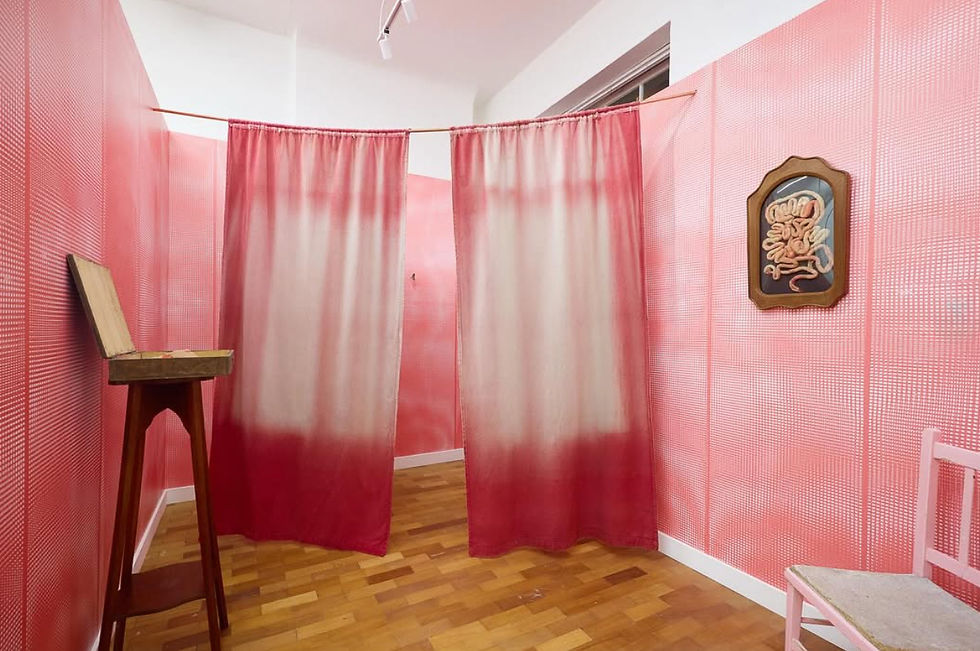

In the Alice Black Gallery booth, Kent artist Rachael Louise Bailey presented a thought-provoking installation that engages with environmental, economic and political issues—inviting viewers to confront the topics often pushed aside. The booth itself was enveloped in patterned wallpaper, its design inspired by the countless washed-up plastic oyster sacks Bailey finds on her local beach. On one wall, a bronze ear cast from an oyster shell bears the physical damage of the plastic sacks, representing the harmful environmental effects of oyster farming. Other accompanying art pieces included in the installation are a vitrine-like display of material intestines and a single female breast—both crafted from tupped wool and nylon. These pieces, which depict fragments of the female form, compel viewers to confront the deeper layers of social injustice woven through Bailey’s practice.
Association of Women in the Arts (AWIT) also took part in the fair, presenting Resonant Spaces: Curating Echoes, a collective exhibition exploring the myth of Echo and Narcissus through the metaphors of reverberation, repetition, reflection, and collective memory, demonstrated by eleven members of AWIT. Upon stepping into the booth, your eyes are drawn directly downward, where a raised mirrored plinth on the floor holds six of the artists' works, each grappling with ideas of selfhood, portraiture, and identity.

The AWIT exhibition’s theme draws directly from the fair’s namesake—Echo. Intrigued, I sought out founder India Rose James among the crowd to ask about the inspiration behind the name Echo Soho. She explained that the name was born from an ancient myth: the story of Echo, the nymph who, after being rejected by her beloved Narcissus, locked herself away in a cave. Day after day, she called out to her lover, in the hopes he would return, until she eventually withered away. As the folklore goes, the people could still hear Echo’s voice long after she was heard, haunting the whole town with her lingering howls.
In speaking with James, the connection becomes clear. Her annual boutique art fair pays homage to that enduring resonance—a celebration of female voices in the art world whose impact carries far beyond the moment. Echo Soho is not just a platform for emerging artists today, but a promise that their voices, like Echo’s, will continue to be heard for years to come.


Comments